
Direct RF Sampling vs Superheterodyne: Choosing an RFSoC Front End
Direct RF sampling now reaches 18 GHz. How to choose between direct sampling and superheterodyne for an RFSoC front end, and the filter, clock and decimation specs that choice sets.
Back to top
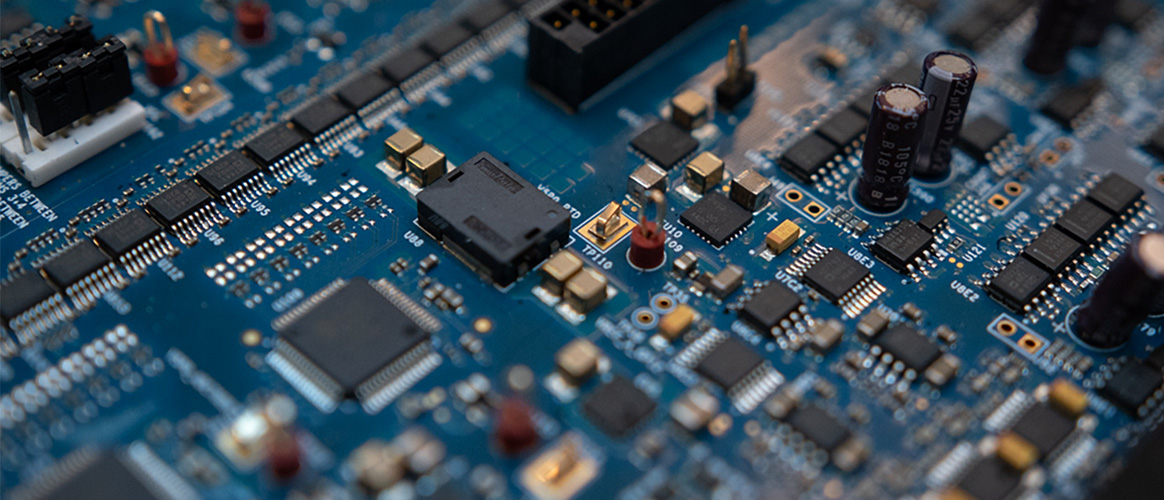
Our last blog in this series discussed how to deal with component shortages by using replacement parts. In it we covered the lucky situation when you’re able to replace your missing part with a nearly equivalent component and the other extreme when a replacement part requires a new PCB layout, new hardware, and updated software. There’s one important technique that we left out that is midway between these two options: using an interposer.
An interposer is traditionally a small custom board that fits between a socket or land pattern (footprint) and a chip. This allows you to plug in chips that have a different form factor than the original – for example, plugging BGA chips into a non-BGA socket. This can be handy when the part you need doesn’t come in the packaging you want – for example, if your equipment or your layout can’t handle the high heats required to flow BGA parts. However, interposers can do much more than just fit chips to a different packaging arrangement. By adding smarts to the interposer – electronics, FPGA, or even software – you can create a replacement part that behaves nearly indistinguishably from the original.
When does it make sense to construct a new interposer board as a “replacement” version of the original component? At Fidus, we recommend interposers as the solution when one or more conditions are met:
Interposers can be used not only to substitute parts but to substitute boards – for example, converting a custom connector to an industry-standard FMC connector. This opens the possibility of using several different daughter cards.
Interposers might not always be perfect plug-in replacements. This can be because the hardware doesn’t perfectly duplicate the functionality of the component being replaced but it can also be because the interposer provides a host of new functionality that you want access to. In either case, you may need to alter the device drivers or low-level interface software to work properly with the interposer board. We recommend modifying the software so it automatically discovers the interposer and adapts to it when it is discovered in the system. This provides a safer plug-and-play environment instead of one that requires multiple firmware loads.
When it comes to building an interposer for your component shortage problem, you don’t want to be experimenting by building this yourself. Interposers represent a relatively narrow field of expertise, but it often requires hardware, firmware, and sometimes FPGA developers to do it right. You need a team that has experience so you can get it right the first time instead of lengthening your redesign or manufacturing delays. What if an interposer appears to be a solution, but after going through the development cycle, you discover that it is not the ideal solution? This is something that experienced engineers can determine right away: perhaps an off-the-shelf board with some software and hardware retrofits is a closer fit to what you need.
We’ve been helping many of our customers with component shortage issues recently. However, we’ve helped customers manage this component obsolescence and component life cycle issues for decades. Our teams have the expertise to quickly find replacements, identify the shortest risk design update and implement while minimizing schedule and cost impacts. If you are dealing with component shortages from pandemic supply chain disruptions – or any other outages in your electronics bill of materials – reach out and we’ll get you back on track.
Direct RF sampling now reaches 18 GHz. How to choose between direct sampling and superheterodyne for an RFSoC front end, and the filter, clock and decimation specs that choice sets.

At 112G PAM4, most channel margin is lost at the transitions, not along the trace. Fidus Signal Integrity Architect Dr. Syed Bokhari explains how stackup, vias, BGA breakout and connector footprints decide 112G and 224G margin, and how COM proves it.
An SRAM adaptive SoC puts configuration scrubbing, interrupt recovery and TMR into your satellite payload design. A flash-based rad-hard FPGA removes that work and caps compute. Here’s how to scope it before choosing the part.
Trust us to deliver on time. That’s why 95% of our customers come back.