
Direct RF Sampling vs Superheterodyne: Choosing an RFSoC Front End
Direct RF sampling now reaches 18 GHz. How to choose between direct sampling and superheterodyne for an RFSoC front end, and the filter, clock and decimation specs that choice sets.
Back to top

Edge computing is transforming how systems gather, analyze, and act on data in real time. This blog examines the crucial role of FPGA Co-Processors in facilitating high-performance, low-latency analytics at the edge, where power efficiency, deterministic behavior, and adaptability are paramount. Drawing on practical design experience and proven architectural models, we’ll walk through key integration strategies, optimization patterns, real-world applications, and the challenges teams must overcome to succeed.
Whether you’re building for industrial IoT, medical devices, or automotive systems, this blog provides actionable insights to help you architect smarter, faster edge platforms.
🔎 Jump to a Section
As embedded devices generate more data at the edge faster and closer to where decisions need to happen, the limits of traditional, cloud-centric models are being exposed. Real-time applications in sectors like industrial automation, healthcare, and autonomous systems can no longer tolerate the delays, bandwidth usage, or reliability risks that come with round-tripping data to remote servers. This is accelerating the need for real-time edge analytics and driving demand for FPGA Co-Processors that can meet performance requirements at the point of data generation.
While cloud platforms offer compute scale and elastic storage, they aren’t always suitable for edge workloads that demand:
In smart manufacturing, milliseconds matter. Anomalies need to be detected and acted upon instantly to ensure safety and product quality. In medical devices, patient imaging and signal analysis must occur in real time to support rapid diagnoses. In autonomous systems, local fusion of sensor inputs must drive immediate decision-making—there is no time to consult the cloud. All of these scenarios require localized, deterministic processing something general-purpose CPUs and GPUs struggle to deliver without tradeoffs.
FPGA Co-Processors provide an ideal solution for edge environments where low latency, power efficiency, and adaptability are paramount. Unlike fixed architecture processors, FPGAs can be programmed to match the exact behavior required by a task and optimized to run in parallel with deterministic timing. This makes them:
For applications where energy consumption, footprint, and heat dissipation are critical concerns, FPGAs deliver customized acceleration without overprovisioning.
At Fidus, our FPGA Design Services are engineered to unlock these advantages, with deep expertise in hardware and software partitioning, performance tuning, and platform integration. For clients building smart edge systems, our Embedded Systems Design Services provide the end-to-end support needed to architect reliable, efficient, and secure deployments.

Edge intelligence is no longer a niche ambition—it is becoming a foundational requirement across industries. But enabling it requires a shift in architecture and mindset. This blog explores how FPGA Co-Processors support that shift, offering proven design patterns, integration strategies, and real-world use cases to help you build next-generation systems that think and act in real time.
At the heart of real-time edge analytics lies a performance challenge: how do you process high-throughput data under tight latency and power constraints, while maintaining flexibility as requirements evolve? FPGA Co-Processors offer a compelling answer—blending custom logic acceleration with real-time determinism in a compact, efficient form factor.
While CPUs provide excellent general-purpose computing and GPUs excel at high-volume parallelism for floating point workloads, both fall short in edge environments that demand:
FPGA Co-Processors stand out because they:
This results in hardware that is not just fast, but appropriately fast for a given task, with deterministic latency and optimized resource usage.
In the past, FPGAs were often relegated to niche, high-performance roles. Today, advances in development tools, abstraction layers, and silicon integration have made them mainstream components in edge platforms. Modern FPGAs now support:
These advancements have brought FPGA Co-Processors into wider use across defense, healthcare, communications, and smart infrastructure applications, particularly when offloading real-time signal processing, control logic, or inferencing tasks.
Here’s why engineers increasingly choose FPGA Co-Processors for edge deployment:
This combination gives embedded system designers the ability to architect solutions that are both high performance and tightly constrained, without needing to compromise one for the other.
Choosing how to integrate FPGA Co-Processors into an edge computing system is just as critical as selecting the co-processor itself. The architectural model you adopt will affect performance, latency, development complexity, and long-term flexibility. From heterogeneous compute pairings to fully integrated SoCs, each model offers tradeoffs that must be carefully weighed against application requirements and development goals.
“The architecture behind your FPGA Co-Processor matters just as much as the co-processor itself—performance, power, and scalability all hinge on this early decision.”

One of the most common integration models involves pairing a general-purpose processor with an FPGA on the same board or module. In this approach, the CPU manages system-level control and orchestration, while the FPGA offloads time-critical or compute-intensive functions such as:
Data can be exchanged between the CPU and FPGA using shared memory, DMA engines, or streaming interfaces, allowing efficient task delegation. This setup works especially well in industrial and communications systems that require both flexibility and acceleration without redesigning the full architecture.
To ensure effective partitioning, our hardware–software integration strategies at Fidus help teams isolate performance bottlenecks and refactor them into deterministic FPGA pipelines.
In some deployments, FPGA Co-Processors function as discrete accelerators connected via high-speed links such as PCIe, Ethernet, or serial interfaces. These are ideal when:
Standalone configurations allow design teams to build reusable accelerator boards or mezzanine cards that drop into a range of host systems. However, this model requires careful attention to IO bandwidth, latency, and driver integration to avoid bottlenecks or synchronization delays.
System-on-chip (SoC) platforms that combine an embedded processor with programmable logic on the same die represent one of the most efficient FPGA integration models. These devices enable:
SoC-based FPGA Co-Processors are especially attractive for edge environments where size, power, and reliability constraints dominate. They are commonly used in automotive, defense, and portable medical systems where the combination of control, interface, and acceleration must be both compact and rugged.
At Fidus, we specialize in designing custom SoC-based systems that take full advantage of on-chip fabric while supporting industry standards and domain-specific workloads.
Each architectural approach presents a different balance across four key vectors:
| Model | Performance | Integration Complexity | Power Efficiency | Programming Flexibility |
| CPU–FPGA | Moderate to high | Medium | Good | High |
| Standalone | High | High | Medium | Medium |
| SoC | High | Low | Excellent | Medium |

When deciding how to deploy FPGA Co-Processors, teams must consider:
No universal blueprint fits every system. The most effective designs start with a clear understanding of your performance needs and platform constraints, then match the FPGA architecture accordingly.
Once the architecture is defined, system efficiency depends on how well the FPGA Co-Processor is integrated into the data flow. Design patterns—proven, repeatable structures for managing data movement and computation—play a key role in maximizing performance, reliability, and reusability in real-time applications.
“Efficient edge analytics starts with structured data flow—your FPGA design is only as fast as the architecture surrounding it.”
At the heart of real-time edge analytics is data flow. Delays in moving data into or out of the FPGA can eliminate the benefits of acceleration. Common techniques include:
Proper alignment of these mechanisms ensures consistent throughput, especially when processing sensor streams or video frames under strict deadlines.
Designers must often balance between two processing strategies:
Some advanced systems use hybrid models, where streaming paths handle real-time analytics while buffers absorb spikes or facilitate asynchronous preprocessing. This is particularly valuable in industrial control loops and autonomous navigation systems where multiple data types must be fused in real time.
Reusability matters, especially in edge deployments with product variants or evolving specs. Key design patterns include:
This modularity accelerates both development and debugging while laying the groundwork for version control and hardware upgrades without major rework.
In resource-constrained FPGAs, efficient utilization is essential. Proven strategies include:
At Fidus, our FPGA Design Services include full performance modeling and constraint-driven synthesis to help customers strike the right balance between performance, area, and power.
By applying these design patterns early in development, teams can avoid costly rework, accelerate validation cycles, and deploy FPGA Co-Processors that operate efficiently under real-world constraints. In the next section, we’ll dive deeper into the practical workflows and validation techniques that turn well-structured designs into robust deployments.
Even the most efficient FPGA Co-Processor design can fall short without a solid implementation strategy. Integrating FPGAs into real-world edge systems requires careful hardware-software coordination, validation workflows tailored for heterogeneous platforms, and pragmatic development planning to avoid costly delays.
“Implementation is where elegant architecture meets messy reality. The difference between success and frustration often lies in how early integration and testing are tackled.”
One of the most important steps is deciding what belongs in hardware and what remains in software. While FPGAs are excellent for deterministic, compute-intensive operations, not all tasks benefit from hardware acceleration. Best practice approaches include:
Fidus works with customers during the early architecture phase to model performance scenarios and map system responsibilities effectively. Our Embedded Systems Design Services help guide this process with insight across firmware, FPGA, and system integration.
Many FPGA deployments fail not in the lab, but in field integration. To ensure minimal disruption, we recommend:
This allows development and validation to happen in parallel—and reduces late-stage surprises.
Debugging in systems where software, firmware, and logic intersect can be challenging. Proven methods include:
Establishing synchronized debug clocks and clear communication between hardware and software teams is also essential—especially when working across time zones or partner organizations.
Accelerating time-to-market without sacrificing reliability means structuring the project with:
These practices reduce downtime between development stages and improve regression test coverage for each platform variation.
For more implementation advice, system-level strategies, and case studies on accelerating design cycles, explore the full Fidus Blog Hub. You’ll find deep dives into secure embedded platforms.
In the next section, we’ll bring theory into practice with real-world examples of how FPGA Co-Processors are solving tough edge analytics problems today.
While the theory behind FPGA Co-Processors is compelling, the most powerful validation comes from real-world results. Across industrial IoT, medical devices, and autonomous platforms, FPGAs are enabling edge systems to do more with less, faster, more predictably, and more efficiently than legacy compute models allow.
“The most demanding edge systems aren’t built around general-purpose logic—they’re designed with real-time hardware acceleration at the core.”
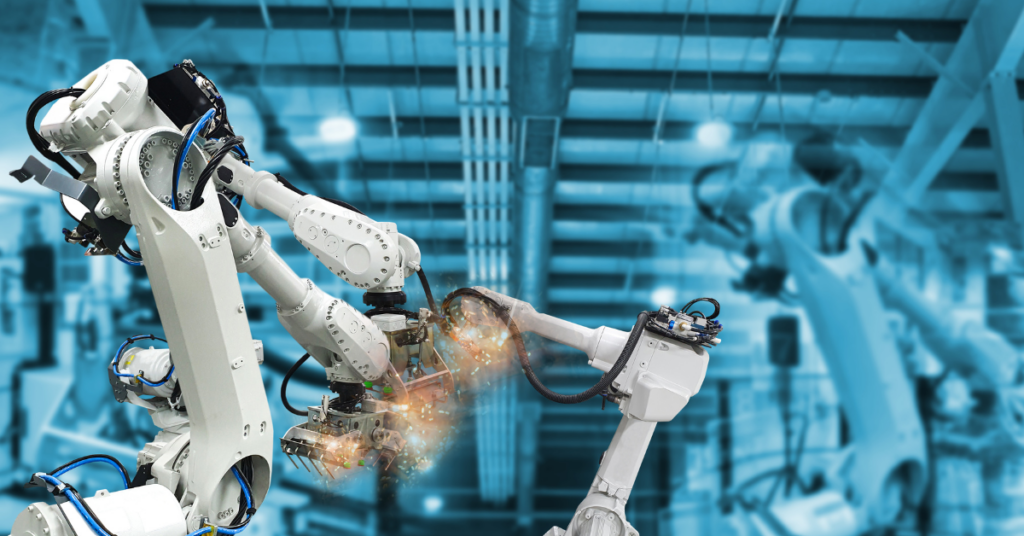
In smart factories, latency isn’t just a performance issue—it’s a liability. One client leveraged a Fidus-designed FPGA co-processing module to monitor high-speed production line data, detect microsecond-scale anomalies, and close control loops in real time.
By moving the analytics pipeline onto the FPGA:
These improvements were possible because the FPGA ran multiple pipelines in parallel, eliminating queue buildup and signal lag.
Portable medical imaging platforms often struggle to balance power constraints with real-time processing requirements. In one recent project, Fidus collaborated with a device maker to accelerate image enhancement and region segmentation directly on the edge device using an SoC-based FPGA Co-Processor.

The result:
This allowed clinicians to view enhanced imagery instantly at the point of care—no cloud upload required.

Modern vehicles gather terabytes of sensor data per day. In an advanced driver-assistance project, Fidus helped develop a multi-sensor fusion module using a standalone FPGA co-processing board.
The system was able to:
With the FPGA offloading heavy lifting, the main processor could focus on planning and control logic, reducing end-to-end latency and ensuring fail-safe execution under demanding conditions.
These case studies demonstrate how FPGA Co-Processors unlock value far beyond raw performance. They allow real-world systems to be smarter, leaner, and more resilient, even in the face of physical, regulatory, and operational constraints.
Real-world edge systems are never designed in a vacuum. Power, latency, and thermal budgets collide with evolving requirements and hardware constraints. To make FPGA Co-Processors truly deliver on their promise, engineers must apply targeted optimization techniques, guided by both system-level needs and in-field realities.
“Optimizing for edge performance means tuning beyond the logic design—success lives in the margins of power, timing, and deployment context.”
Latency optimization in FPGA-based systems is not about raw speed alone—it’s about predictable speed. To maintain determinism while minimizing delays, consider:
Fidus engineers routinely use simulation and synthesis timing reports to uncover and flatten micro-latency sources before hardware is finalized.
For edge systems operating on batteries, solar power, or tight thermal budgets, power optimization is often as important as throughput. Key techniques include:
FPGA Co-Processors often allow for algorithm-specific tuning not possible on general-purpose hardware, enabling deeper energy savings without feature loss.
Edge systems evolve. Data rates increase. Algorithms change. Scalability planning ensures your design survives beyond version one. Recommended practices include:
Fidus incorporates these strategies early in the development lifecycle to help clients scale across product lines and evolving use cases.
Performance optimization is not a one-time event—it’s an ongoing calibration between design intent, system behavior, and field feedback. With the right tools, metrics, and planning, FPGA Co-Processors can be tuned to meet the edge where it lives: precise, lean, and ready to grow.
Next, we’ll explore common pitfalls that can derail even well-optimized FPGA-based edge systems—and how to avoid them through robust design practices and abstraction strategies.
Even with a solid architecture and strong optimization plan, teams deploying FPGA Co-Processors in edge environments face a unique set of challenges. These range from knowledge gaps between software and hardware engineering to resource limitations and system-level validation issues. Knowing where the friction points are—and how to address them early—can mean the difference between a successful launch and a stalled deployment.
“Edge systems don’t fail because of one big mistake—they fail from dozens of small mismatches between hardware, software, and expectations.”
Many engineering teams are rich in embedded software expertise but light on FPGA design fluency. This skill gap can lead to mismatches in timing expectations, tool usage, and debugging workflows. To overcome this:
At Fidus, we help bridge these domains by providing embedded experts and FPGA architects who speak both “languages,” aligning system logic with application-level requirements.
Timing closure is often the most time-consuming step in FPGA design. As designs scale in complexity, closing timing across interfaces, control paths, and data pipelines becomes harder, especially on smaller or lower-cost FPGAs. Common strategies include:
Our teams use constraint-driven synthesis and validation tools to minimize rework during late-stage closure, while keeping system margins healthy.
In edge systems with CPUs, FPGAs, and sometimes GPUs or MCUs, validation gets complicated quickly. You’re not just testing function—you’re testing coordination. Best practices include:
Fidus employs Universal Verification Methodology (UVM) where appropriate, and supports validation strategies tuned to time-to-market needs.
Edge deployments are rarely static. Whether it’s a new sensor type, algorithm change, or updated host platform, FPGA Co-Processor systems need to adapt over time. Building for change means:
Our FPGA Design Services incorporate modularity and documentation from day one, reducing the risk of vendor lock-in or architectural cornering later in the product lifecycle.
Edge analytics solutions are only as reliable as the frameworks that support them. By addressing these common friction points early and by partnering with experts who understand both FPGA and system integration, teams can move from prototype to product with fewer surprises.
Next, we look ahead to future trends that will shape how FPGA Co-Processors evolve and what new opportunities they will unlock.
As edge analytics continues to evolve, FPGA Co-Processors are becoming more than just accelerators—they are foundational components in the architecture of next-generation intelligent systems. The future of edge design will be shaped by advances in AI acceleration, heterogeneous compute, standardization, and ecosystem maturity. Teams that anticipate these shifts will be better positioned to move faster, design smarter, and scale confidently.
“The edge of tomorrow demands adaptable, low-latency systems—and FPGAs are at the center of that transformation.”
AI workloads are moving closer to the edge—where inference must be performed locally for reasons of latency, security, or bandwidth. FPGAs are ideally suited to this transition because they offer:
Whether it’s YOLO-style object detection in a camera module or anomaly detection in a factory sensor, FPGA Co-Processors allow AI to be embedded at the edge without sacrificing power or determinism.
Looking ahead:
We anticipate wider availability of FPGA AI overlays, improved compiler support for popular ML frameworks, and deeper ecosystem collaboration between silicon vendors and AI tool providers.
The future of edge platforms isn’t one processor—it’s many. CPUs, GPUs, MCUs, and FPGAs will increasingly work side by side, each optimized for a different class of workload. In this model:
For designers, this means thinking beyond single-chip optimization. Architectures must include shared memory, synchronized clocks, and unified development frameworks to enable efficient co-processing across device types.
Fidus is already helping clients navigate this transition, with system-level expertise in FPGA integration across mixed compute environments, from signal routing to software abstraction.
As FPGA adoption grows, industry standards are making it easier to integrate, program, and scale these devices. Emerging developments include:
This maturation reduces the barrier to entry and makes FPGA Co-Processors accessible to broader development teams, especially those with software backgrounds.
How Fidus Helps Clients Seize What’s Next
Staying ahead of these trends requires not just tools, but insight. Fidus delivers both. Our team brings decades of experience across:

Our advantage isn’t just technical—it’s strategic. We help clients align their hardware roadmaps with emerging standards, future-proof their platforms, and accelerate their ability to deploy high-performance edge analytics.
As edge applications grow in scale and sophistication, FPGA Co-Processors will continue to lead the way in performance, efficiency, and adaptability. The organizations that invest in the right architecture, tools, and partners today will be the ones building the edge platforms that define tomorrow.
Real-time edge analytics is no longer a future ambition—it is a competitive necessity across industries from manufacturing to medicine to mobility. But building systems that can process data in place, act immediately, and evolve over time requires more than software—it demands intelligent hardware design at the edge.
FPGA Co-Processors provide a powerful answer. With their blend of performance, determinism, and flexibility, they unlock capabilities that general-purpose processors simply cannot match. Yet harnessing that power requires thoughtful architecture, robust integration practices, and the ability to navigate the evolving landscape of AI, heterogeneous compute, and system-level design complexity.
That’s where Fidus comes in.
From early architecture planning to production-ready deployment, Fidus helps clients design smarter systems faster. Our team of FPGA and embedded experts collaborates closely with yours to deliver not just acceleration, but long-term platform viability. We understand the edge, and we engineer with it in mind.
Ready to Build for What’s Next?
Let’s talk about how we can help you reduce latency, optimize power, and deliver intelligent edge solutions that scale.
📩 Get in touch with our team
📚 Or explore more insights in our Blog Hub
Direct RF sampling now reaches 18 GHz. How to choose between direct sampling and superheterodyne for an RFSoC front end, and the filter, clock and decimation specs that choice sets.
At 112G PAM4, most channel margin is lost at the transitions, not along the trace. Fidus Signal Integrity Architect Dr. Syed Bokhari explains how stackup, vias, BGA breakout and connector footprints decide 112G and 224G margin, and how COM proves it.
An SRAM adaptive SoC puts configuration scrubbing, interrupt recovery and TMR into your satellite payload design. A flash-based rad-hard FPGA removes that work and caps compute. Here’s how to scope it before choosing the part.
Trust us to deliver on time. That’s why 95% of our customers come back.