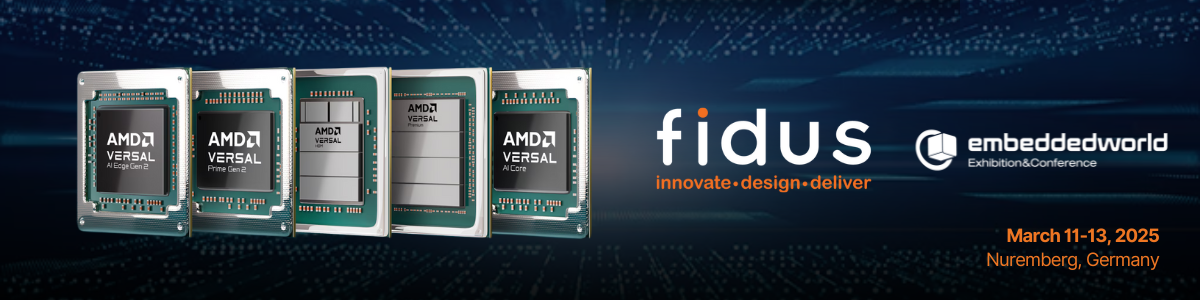
Vision processing demands are rapidly evolving, and embedded systems must keep up with the growing need for real-time AI applications, high-speed data processing, and flexible hardware architectures. At Embedded World 2025 (Booth 5-142), Fidus Systems will showcase deep expertise in FPGA-based design with a live demonstration of CPU-based vs. FPGA-accelerated vision processing.
This demonstration highlights why leading industries—including aerospace, industrial automation, and medical imaging—are integrating FPGA acceleration into their vision systems.
Inside the Demonstration: Vision Processing with CPU vs. FPGA
The demo features two Sapphire AMD Embedded+ systems running the same vision application—one leveraging traditional CPU processing and the other utilizing FPGA acceleration with AMD Versal™ adaptive SoCs.
It’s a demonstration of FPGA’s expanded capabilities in handling high-performance vision workloads:
- CPU-only processing – Shows typical latency, frame rate limitations, and reduced scalability for AI-based workloads.
- FPGA-based processing – Runs at higher frame rates, lower latency, and supports more diverse I/O types, such as GMSL cameras, enhancing flexibility and performance.
While the CPU pipeline produces richer color output, the FPGA solution delivers smoother performance and expanded input compatibility. Attendees will see firsthand how FPGA acceleration provides real-world efficiency gains for embedded vision.
Embedded Expertise: Why Fidus?
Fidus has over 20 years of experience designing high-performance embedded solutions that power some of the most advanced FPGA-based applications in the industry. Our expertise spans:
- Custom FPGA system design and high-speed processing
- AI-driven edge computing solutions
- Complex vision system integration for aerospace, industrial, and medical markets
- We work closely with AMD and other leading semiconductor companies to develop next-generation embedded solutions that drive real business impact.
Conclusion: Why This Matters
Industries relying on AI vision applications—whether in medical imaging, aerospace, or industrial automation—demand ultra-fast, real-time processing. However, CPU-based systems often introduce challenges:
- Increased latency, impacting real-time decision-making
- Lower frame rates, reducing responsiveness and accuracy
- Limited scalability, restricting AI vision capabilities and input flexibility
Fidus is solving these challenges with advanced FPGA-based architectures, high-speed processing solutions, and deep embedded systems expertise. At Embedded World 2025, our team will demonstrate how FPGA acceleration can improve efficiency, scalability, and system performance.
Meet the Fidus Team at Embedded World Germany 2025
Our executive team will be on-site to discuss how FPGA acceleration and advanced embedded architectures can drive the next phase of your business’ vision processing strategy:
This is an opportunity to connect with industry leaders who have decades of experience in embedded systems, FPGA design, and high-performance computing.
Book a meeting with our team in advance.